WHAT EXPERTS SAY
Keynote Collection
Training Programme - Active and Connected
Specific challenges and obstacles in integration work with (young) women with a migration background
Julie de Cesaris
Women with migration experience rarely face only one barrier to integration. Language level, family responsibilities, educational background, previous work experience, age, gender and knowledge of the host country often influence one another. Integration programmes must therefore consider the person as a whole rather than focusing only on language learning or access to employment.
The Teens2Queens Competence Gap Report provides useful information about young migrant women aged 15 to 25. Based on 209 questionnaire responses and 42 qualitative interviews, it highlights both their strengths and the difficulties they face when building their personal, social and professional future in a new country.
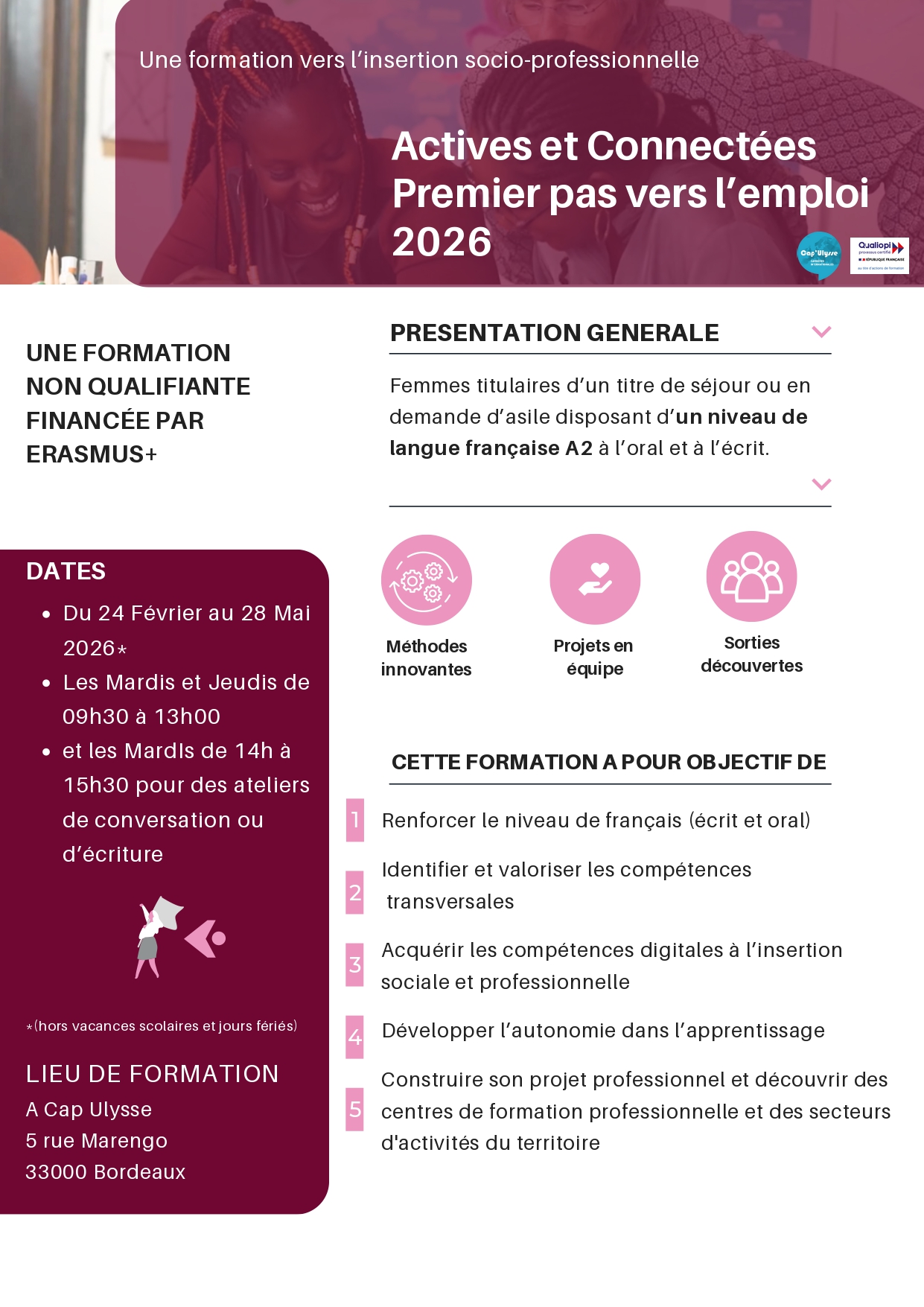
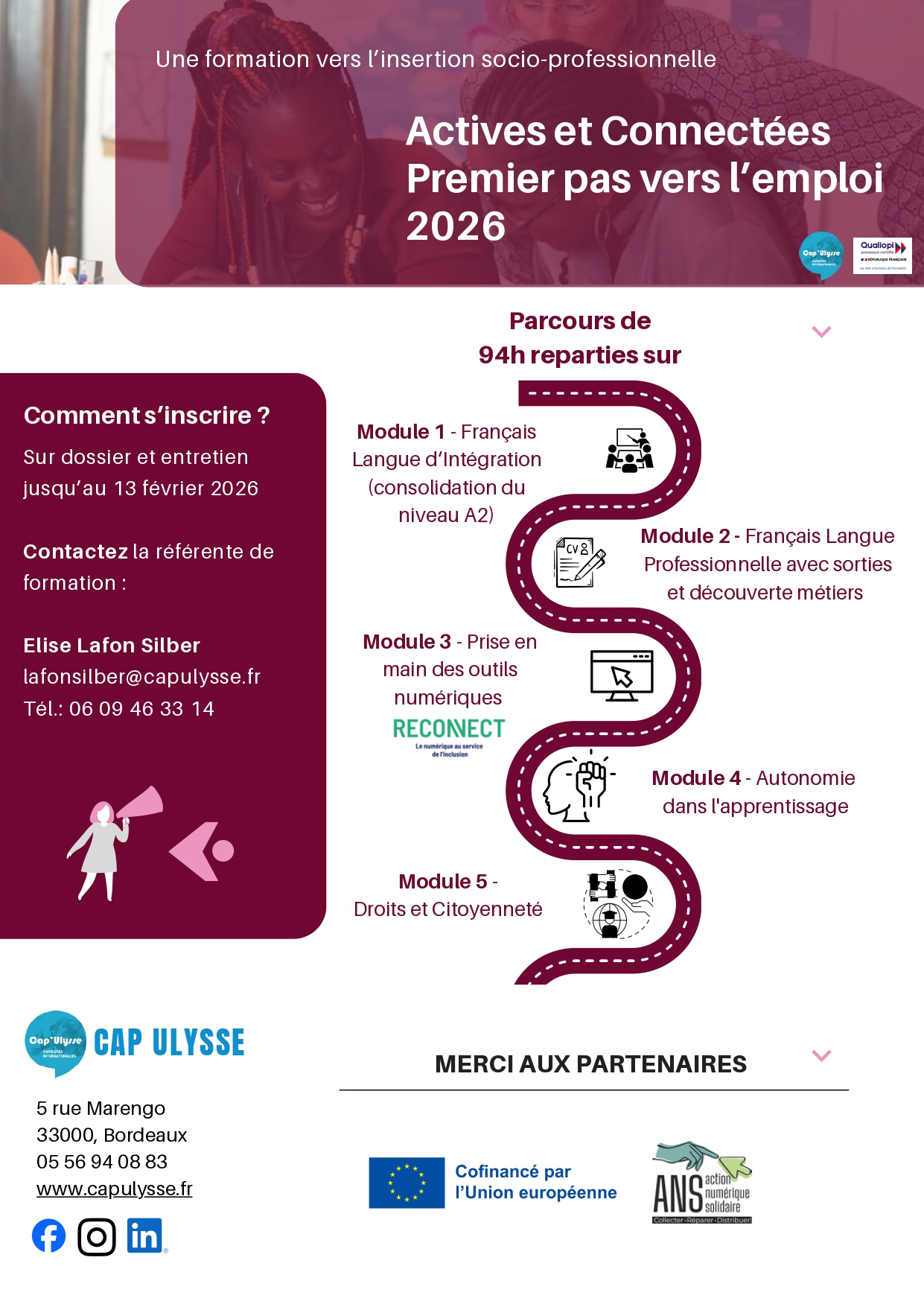
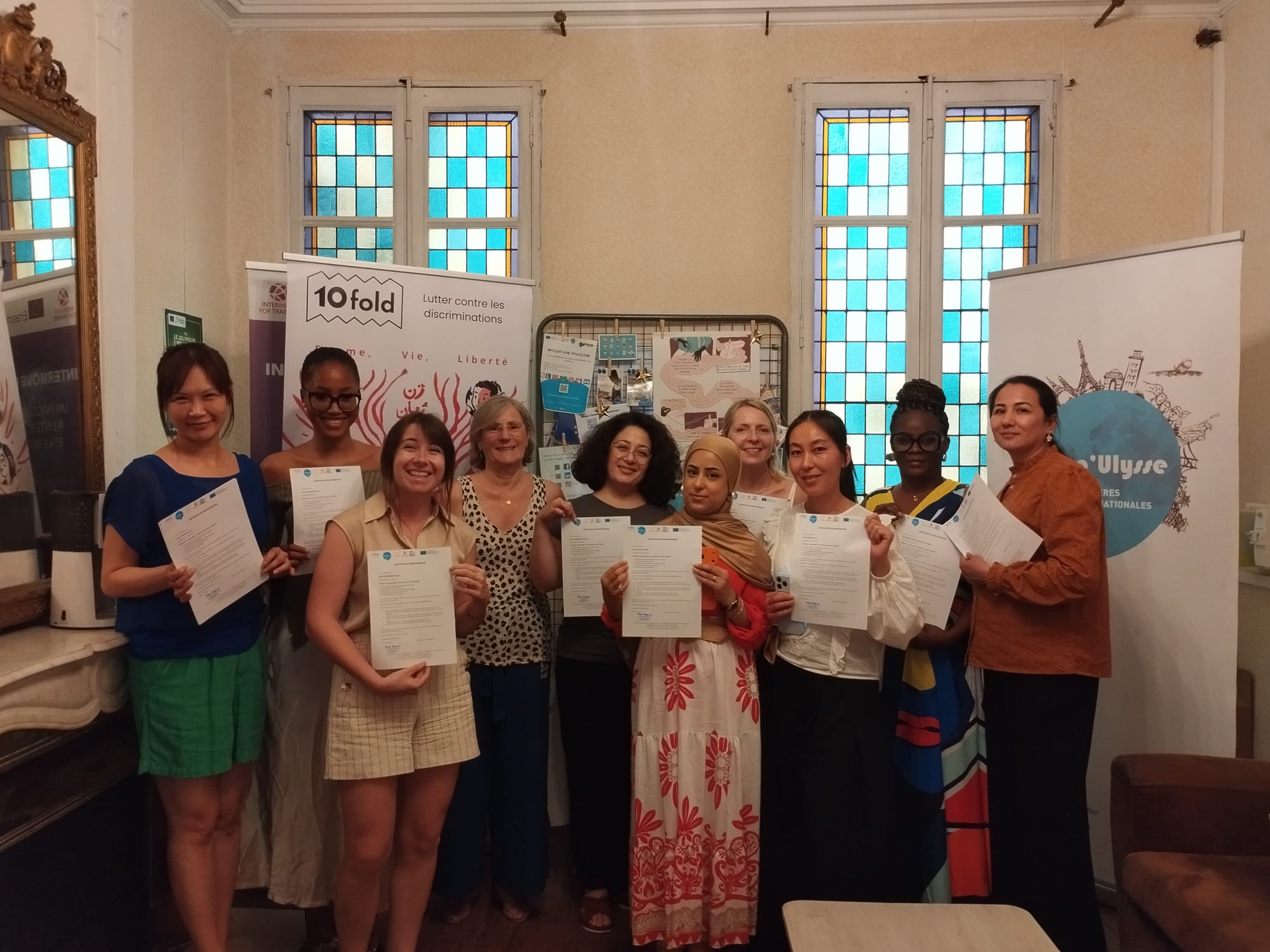
Many of these findings can also be observed in Actives & Connectées, the social and professional integration programme run by Cap Ulysse in Bordeaux. The main obstacle is often the level of French, which can affect the participants’ understanding of training content, communication with institutions, job applications and confidence in professional situations.
The groups are also highly diverse. Some participants completed university studies or gained professional experience in their country of origin, while others experienced interrupted schooling or had limited access to education. A woman who already knows how to take notes, organise her work or look for information may adapt more easily to training, even when her French is still developing. Another participant may first need support to understand instructions, develop learning methods and work independently. These differences are not necessarily linked to motivation or ability, but to the educational opportunities available before migration.
Cultural and professional codes can also create misunderstandings. Expectations regarding punctuality, communication, professional behaviour, teamwork or relationships with trainers and managers may differ between countries. Some participants may be unfamiliar with the importance given to asking questions, expressing an opinion or taking initiative in a French workplace. A participant who remains silent may believe that she is showing respect for authority, while a late arrival may be connected to transport, childcare or an administrative appointment. Integration work therefore also means making these unwritten rules visible and allowing learners to discuss and practise them without feeling judged.
Family responsibilities are another major challenge, especially for mothers of young children. Childcare, school schedules, illness and appointments can affect attendance, concentration and availability. When difficulties accumulate, it becomes harder to follow the course and remain motivated. Suitable schedules and, whenever possible, childcare solutions are therefore essential.
To respond to these challenges, the training Actives & Connectées uses interactive and practical methods with learners of all ages. Role plays, real-life situations and French exercises based on everyday and professional contexts make language learning more concrete. Participants can practise speaking to a manager, communicating with colleagues, making an appointment or preparing for a job interview in a safe environment where mistakes are part of the learning process.
Other activities help participants identify their needs, recognise their strengths, prepare a CV, understand their rights, work in a team and become more independent. Group exercises develop cooperation and confidence, while individual tasks strengthen the ability to learn and understand. By improving practical knowledge, the programme also helps make personal and administrative difficulties more manageable.
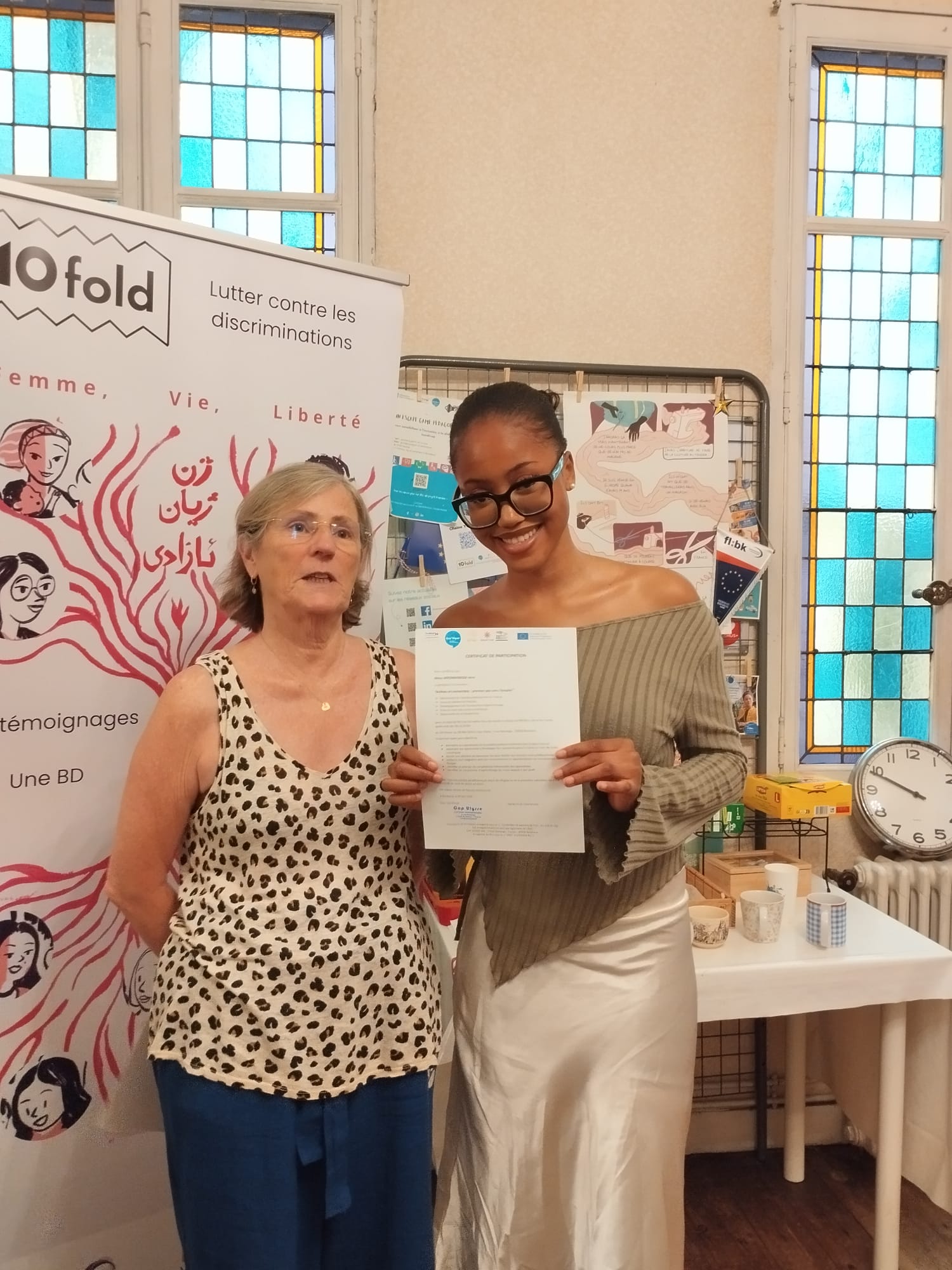
Comics and resources created through the 10fold project support French learning through stories based on the experiences of women with migration backgrounds. Because these stories are close to the learners’ realities, they encourage discussion, personal expression and participation. These approaches do more than teach vocabulary and grammar: they support confidence, autonomy and understanding of social and professional situations.
Younger participants often respond positively to this active learning approach. In Actives & Connectées, many show curiosity, flexibility and a strong desire to continue their education or enter the labour market. This is consistent with the Teens2Queens findings: about 82% of respondents gave positive answers when asked whether they knew their strengths and the areas they wanted to improve, while around 73% felt able to remain motivated during difficult situations.
However, the report also shows that many practical competences have not been sufficiently developed through school or previous integration courses. Around 42% of respondents reported little or no previous practice of personal, social and learning-to-learn skills. More than half had received little or no opportunity to practise citizenship competences, while 54% had practised project-related and entrepreneurial skills only a little or not at all.
A brief comparison with women over 25 shows how priorities may change with age. In the training Actives & Connectées, older participants are often more concerned about long-term stability and feel greater pressure to find employment quickly. Some have already built a career and find it frustrating to start again or consider jobs that do not match their experience. The lack of recognition of foreign qualifications, language requirements, family responsibilities and financial pressure can make retraining difficult. Age, gender and migration experience may also combine to reduce employment opportunities, as highlighted by the HERoic Tracks research.
Older women may therefore need stronger support with qualification recognition and career change. For younger women, the priority is to prevent current barriers from limiting their future choices. They already bring resilience, multilingual abilities, creativity and motivation. By combining language learning with practical activities, confidence-building and real-life experience, integration programmes can help them recognise their potential and turn their motivation into lasting participation in education, employment and society.
Julia De Cesaris, project assistant and Elise Lafon Silber, training coordinator (Cap Ulysse)

ABOUT THE AUTHOR
Julie de Cesaris
Bordeaux, France
lafonsilber@capulysse.fr
Julie de Cesaris is a project assisstant at Cap Ulysse
www.capulysse.fr | LinkedIn