It is very reassuring to see that the funding and existence of every EU project are genuinely justified by current political developments and wider societal debates. When it comes to Teens2Queens, all you need to do is switch on the TV or open your social media!
By autumn 2026, youth movements had emerged in many European countries, publicly expressing deep dissatisfaction with their living conditions and prospects for the future. The younger generation, so often considered as a bunch of “spoiled heirs”, “internet addicts”, and “egoistic hedonists”, is now showing a side that should make many people reconsider their views. Without powerful lobbies, political backing or substantial financial resources, young people are organising themselves, mobilising hundreds of thousands and raising remarkably sincere and unselfish demands that are desirable not only for young people but also for society as a whole: sufficient and well-paid jobs, lower living costs, affordable housing, healthy environments, better education systems and frameworks for free, peaceful, participatory and democratic personal and societal development.
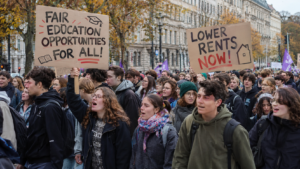 If we did not know any better, one might think that the founders of the EU, right up to Ursula von der Leyen, had personally written the slogans themselves that we see on the young demonstrators' posters. After all, their demands express nothing more than the very core messages promoted by the European Parliament, the Commission and the Council in many of their policies and publications (see, for example, Treaty on European Union, Articles 2 and 3; European Pillar of Social Rights, 2017; EU Charter of Fundamental Rights, 2000/2009; European Green Deal, 2019; Action Plan for the European Pillar of Social Rights, 2021; Affordable Energy Action Plan, 2025; EU Anti-Poverty Strategy, 2026, etc.). It is somewhat strange, then, that these youth protests are often viewed with so much suspicion and criticism when, basically, they are only demanding what has been promised to them!
Of course, one must not turn a blind eye to some of the things that have gone horribly wrong or to mistakes that have been made. Any form of violence and vandalism must be condemned in the strongest possible terms, as must also the exploitation of peaceful social protests by militant groups of any kind, whether from the political left or right, or from ethnic, religious, autonomous or other backgrounds.
However, the vast majority of the protests are peaceful and are driven by grassroots movements formed by young people who feel that, so far, they have not been sufficiently listened to. Although statistical analyses of the participation and role of young people with a migration background in the European youth protests of 2026 are still lacking, there are good reasons to believe that many of the issues raised by the protesters may be particularly relevant to them. The OECD and European Commission (2023) show that young adults with immigrant parents in the EU are more likely to have lower educational qualifications, leave education early and face difficulties entering the labour market. According to Eurostat (2024), young non-EU citizens are more than twice as likely to be at risk of poverty or social exclusion compared to young nationals living in their own EU country.
In a European society where young people increasingly feel that their voices are not being heard, those with a migration background often face additional barriers to participation and recognition. However, we know that within this already disadvantaged group, girls and young women face further inequalities and obstacles compared to their male counterparts (OECD/European Commission, 2023). On top of an already long list of disadvantages related to age, ethnicity, cultural background, language, migration history or educational deficits, girls and young women are often also confronted with conservative and patriarchal gender roles, predetermined life paths and caring responsibilities within their families. Caught in these intersecting forms of disadvantage, they often find themselves at the very end of a long line of people whose wishes, needs and concerns remain unheard – and in their particular case, they themselves often remain unseen as well.
This is where Teens2Queens comes in. Our main objectives are to raise awareness of the difficult situations many young women with a migration background face and to give them a voice to express their needs, hopes and dreams, but also the barriers they encounter. Education, personal development and empowerment are key to achieving this. In particular, we focus on three of the eight European key competences for lifelong learning (Council Recommendation 2018/C 189/01): Personal, Social and Learning to Learn Competence (No. 5), Citizenship Competence (No. 6) and Entrepreneurship Competence (No. 7). Strengthening these competences can help everyone, but also these young women make their own choices, gain confidence, participate actively in society and become engaged European citizens. However, Teens2Queens also recognises that change cannot come from young women alone. Education systems, politics and society must do their part to remove barriers and create conditions in which learning, participation and active European citizenship become meaningful, accessible and attractive to them.

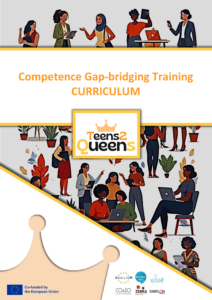 Moving from strategy to action, we firstly developed the Teens2Queens Competence Gap Detector. It helps young women identify selected competences they already have and areas where further development might be useful. Large parts of the assessment can be completed online, lowering access barriers. Rather than focusing on deficits, the gap detector offers a starting point for recognising strengths and deciding what to develop next.
Results from the competence gap analysis directly lead to the Competence Gap Bridging Programme. It translates the three competence areas into practical learning activities, combining classroom learning, practical exercises and online elements, with all the materials being available through an e-learning platform. Currently, around 40 young female learners are moving from pilot training to action. At the end of their training, they will be enabled to develop their own ideas about what European citizenship means to them, how they can address this topic together with others and how it is possible to increase interest and enthusiasm for it. In spring 2027, they will take their projects, that have been actually implemented, experiences and ideas to Brussels and discuss them with European policy-makers – not only to demonstrate their personal and professional development, but also to express their demands concerning what Europe can do to make their lives better, to improve their opportunities and to make their active participation in modern Europe more meaningful.
Alongside the assessment and training components, the Teens2Queens Living e-Journal serves as a comprehensive online resource with a strong participatory character and policy dimension. Designed to continue growing throughout the project and beyond, it comprises three complementary features:
- The Learning Diaries give the young women a space and voice to share their experiences, ideas and learning journeys during the pilot training and to present their micro-projects.
- The keynote collection What Experts Say brings together different perspectives on migration, discrimination, gender equity, inclusion, EU citizenship and participation. Results and lessons learnt from our project work re-explored in greater depth, external experts from different EU countries share their views and relate them to our project, while stakeholders provide authentic insights into their daily lives and professional experiences.
- The Flagship EU Projects section looks beyond Teens2Queens and presents inspiring approaches from other EU initiatives. It provides a freely accessible pool of good practices, methods and products from across Europe. At the same time, it creates a powerful network of more than 20 project groups keen to exchange experiences and learn from each other.
Our Living e-Journal is really living! It is freely accessible to everyone, and we are always looking for new articles and contributors. You are very welcome to share your opinions and perspectives in a keynote article or promote your EU project to a wider European audience. Just follow the online instructions for submitting your own contribution – which is, of course, completely free of charge.
Don't be shy … we look forward to seeing you!
Michael

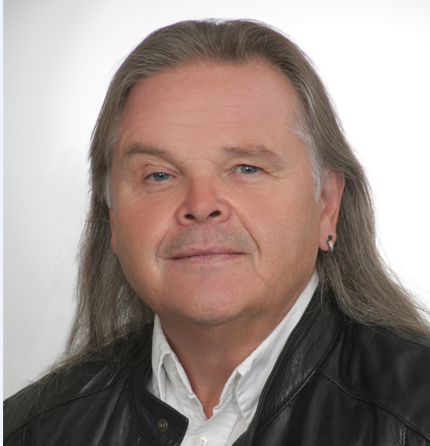
ABOUT THE AUTHOR
Michael Schwaiger
Graz, Austria
michael.schwaiger@auxilium.co.at
Micheal Schwaiger is the head of board of Verein Auxilium pro Regionibus Europae in Rebus Culturalibus (project coordinator)
www.auxilium.co.at | Facebook | Instagram